
TECHNICAL PRODUCT CATALOGUE
Stainless Steel Tanks
Stainless steel storage tanks for project-specific industrial applications. Share fluid, temperature, material and connection requirements.
Information to include in your RFQ
We can define material and surface requirements from the intended service. Share available data and a drawing even if some values are not yet final.
- Intended use and fluid to be stored
- Required volume and any layout dimensions
- Known operating pressure and temperature
- Required material grade, if known
- Internal and external surface and cleaning requirements
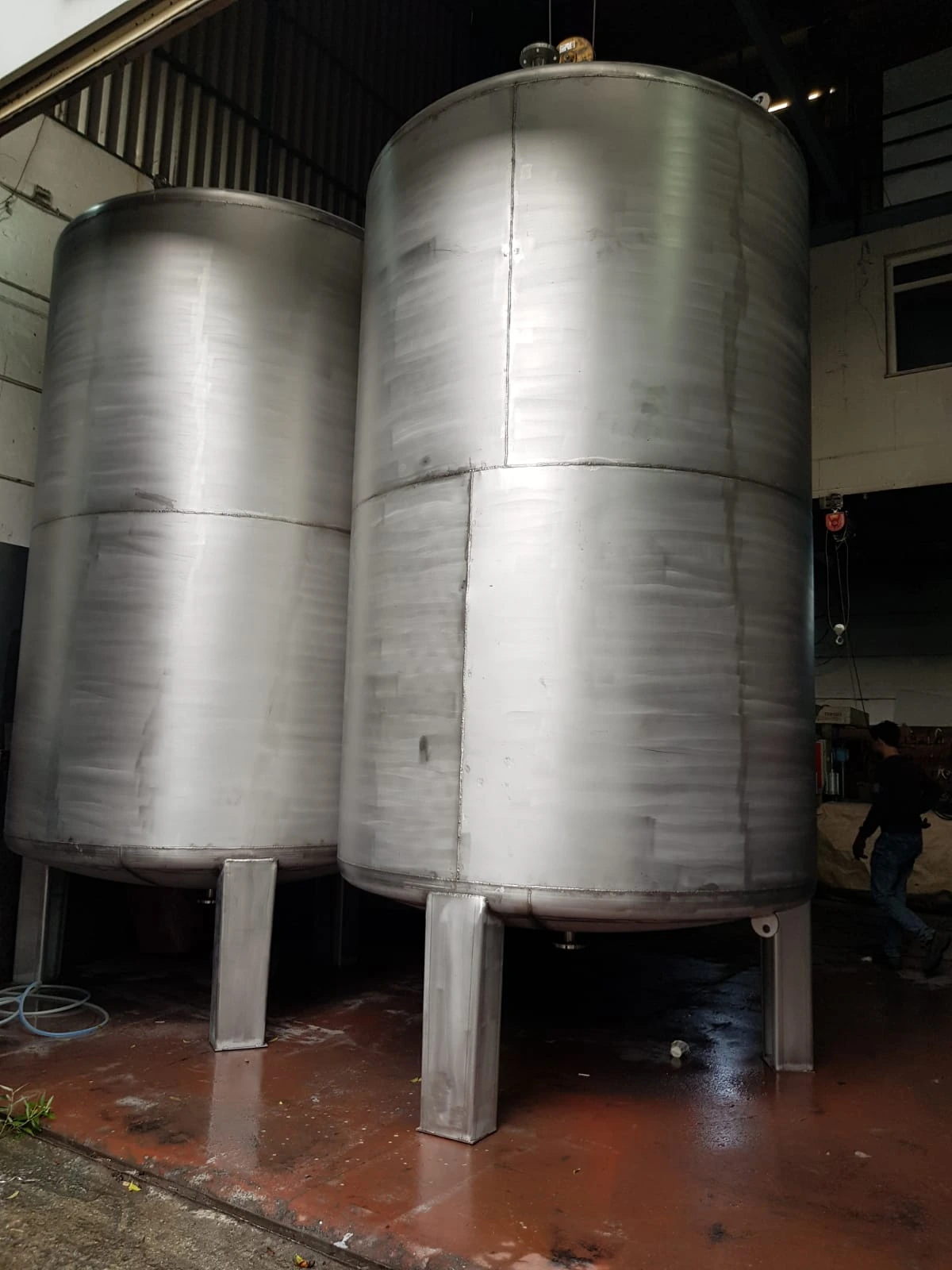
Stainless steel tanks are used in process and water applications where material selection and cleanability matter. Their suitability is assessed against the actual fluid and service conditions rather than assumed from the alloy name alone.
Design and fabrication inputs
Provide operating temperature and pressure, required volume and dimensions, preferred material grade such as AISI 304, 316 or 316Ti, head geometry, connection locations and pressure classes. Where relevant, add fluid analysis and cleaning conditions.
Send a technical drawing or specification for a project-specific quotation. The material and inspection scope are agreed against your requirements.
Design criteria and materials
Stainless tanks may be considered for food, process, domestic or drinking-water duties only after assessing fluid compatibility, hygiene requirements and relevant approvals.
Define operating pressure and temperature, volume, dimensions, material grade, head geometry and connection pressure classes. AISI 304, 316 and 316Ti and ellipsoidal, conical or torispherical heads are examples of choices to specify; they are not all features of every tank.
Engineering Note
In chloride-bearing fluids, molybdenum-containing 316L may offer better resistance to pitting than 304L. Assess chloride concentration together with operating temperature, cleaning chemicals and the time the fluid remains in the tank. In welded regions, the low carbon content of 304L and 316L helps reduce corrosion risk associated with sensitisation.
With your RFQ, provide fluid analysis where available, normal and maximum operating temperatures, cleaning regime and requested material documentation. These details allow material options to be compared for the same service conditions.